The Cost of This Job
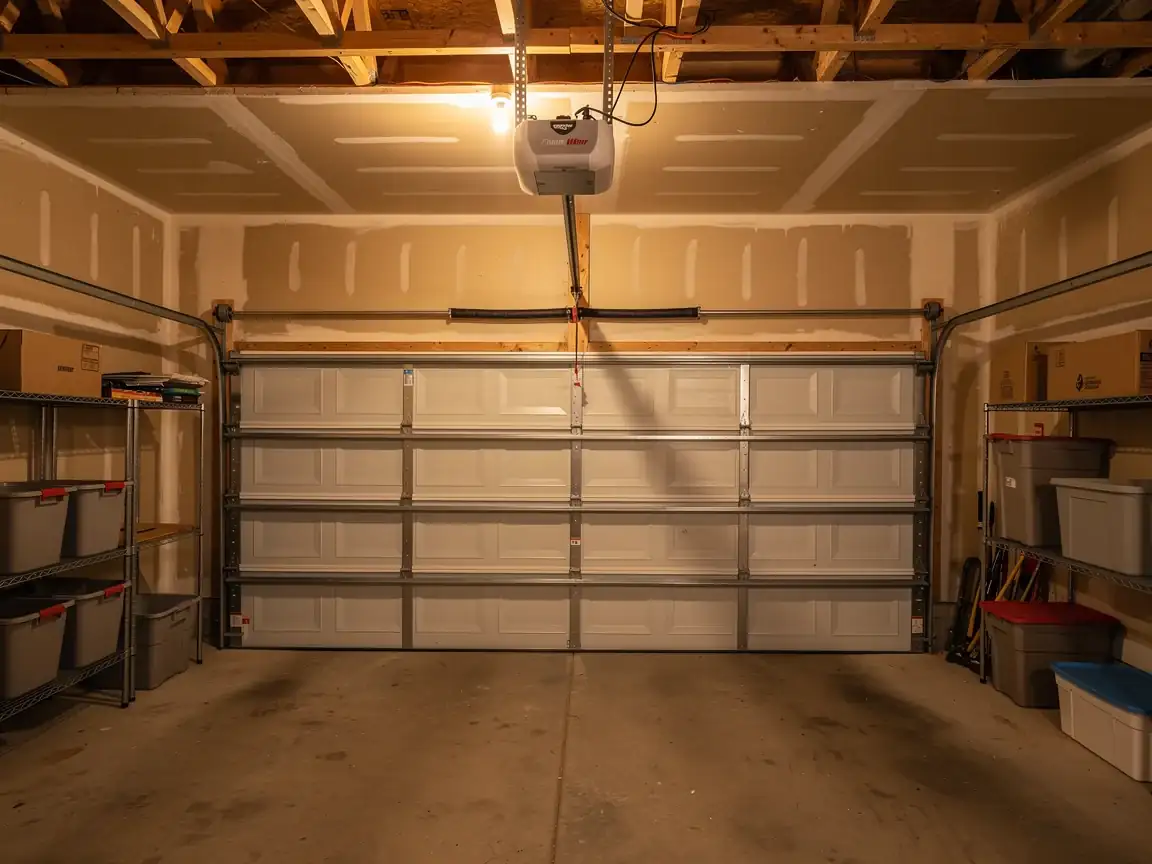
Northampton's median home dates to 1938, a good quarter-century older than the service area's overall median of 1964. That gap matters for openers because the door and the opener on a house this old were almost never installed at the same time. A lot of these houses got their first chain-drive unit sometime after the war, then a second one in the 80s or 90s when the first motor gave out, and the bracket, the rail, and the header mount from that second install are often still in place today - just worn past the point of smooth travel. What you pay depends on whether we're replacing a logic board, a gear and sprocket kit, or the whole unit including a new rail system to match a track that's been re-shimmed more than once. We quote after we see the mounting and the wiring, not before, because guessing on a house this age usually guesses wrong.
Can You Do This Yourself
Swapping a remote battery or resetting the travel limits is fine to do yourself, and plenty of Northampton owners already do. Where it stops being a DIY job is the gear and sprocket assembly inside the motor housing - on a chain-drive unit from a prior decade, that plastic gear is usually the actual point of failure, not the motor, and it's a common one on units this old. Opening the housing without knowing what you're looking at risks stripping the drive or cross-threading the sprocket shaft, which turns a $40 part into a full unit replacement. If the door reverses randomly, grinds, or the opener runs but the carriage doesn't move, that's gear territory, and that's where we'd rather you call before you take the cover off.
What the Fix Involves
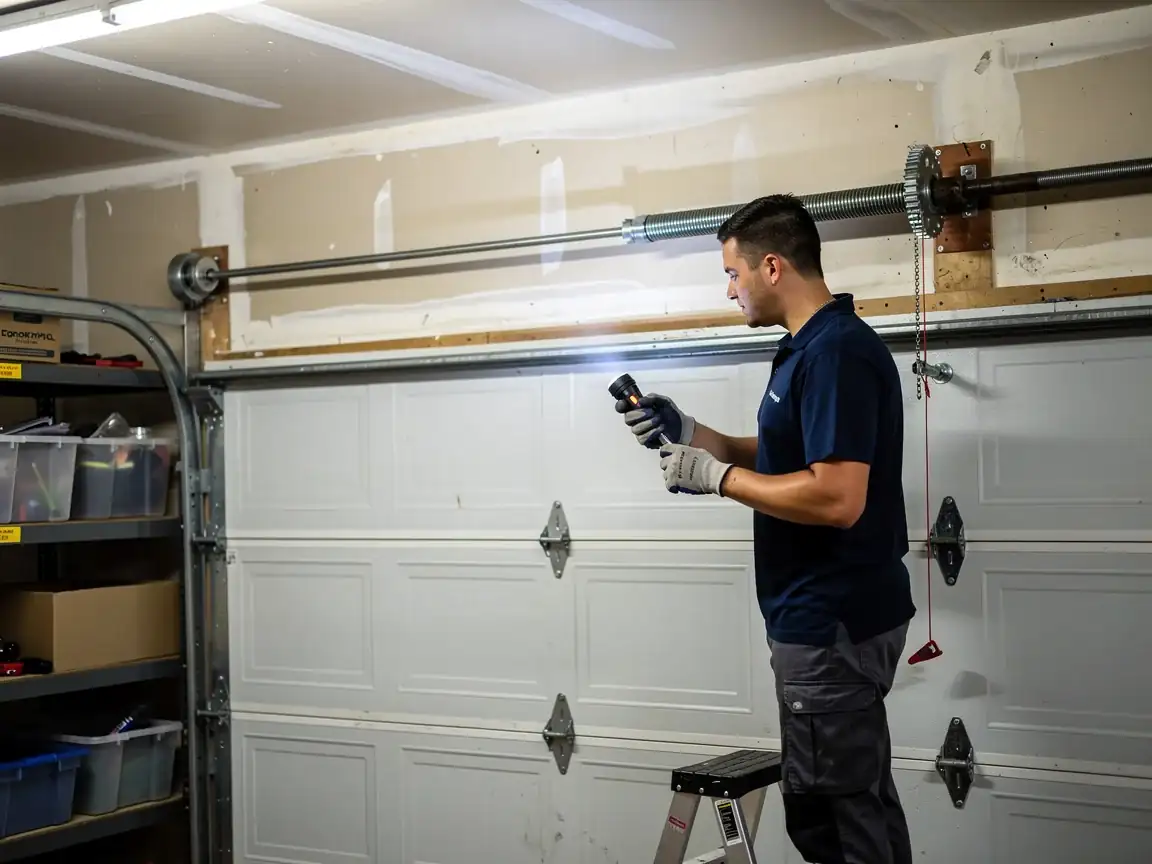
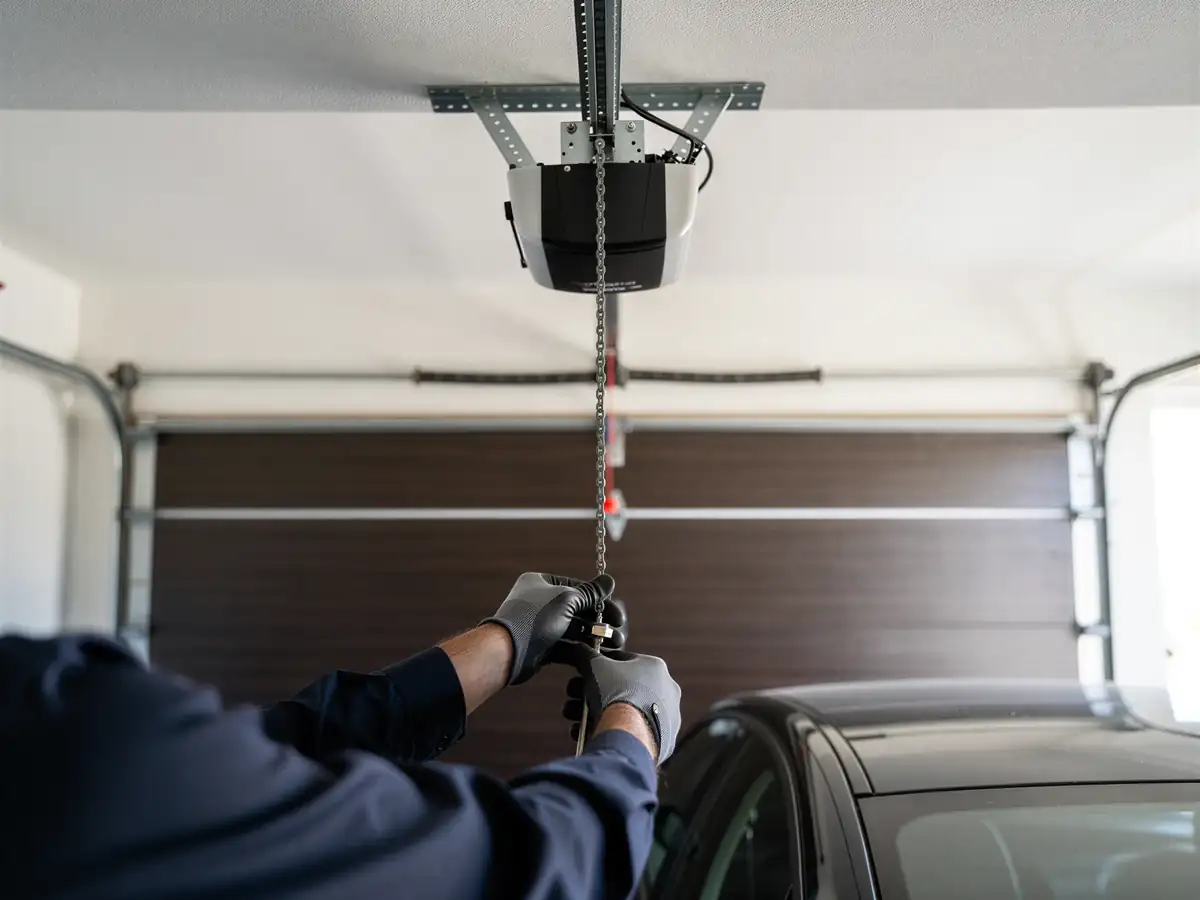
Most calls on houses from this era start with us pulling the motor cover to check the gear and sprocket kit before we touch anything electrical - it's the part that fails most on units that have been running since before smart-home openers existed. If that's clean, we move to the logic board and the safety sensor alignment, since houses that have had the door or opener swapped once already sometimes have sensors mounted at mismatched heights from two different installs. In this part of the valley, winters sit solidly in the cold-severe band, and cold makes stiff grease and marginal gear teeth fail faster, so we also check that the unit's lubrication hasn't gone thick and gummy before we call anything else the cause. If the board itself is dead, we replace it rather than patch it - boards don't get repaired in the field.
Where This Job Goes Sideways
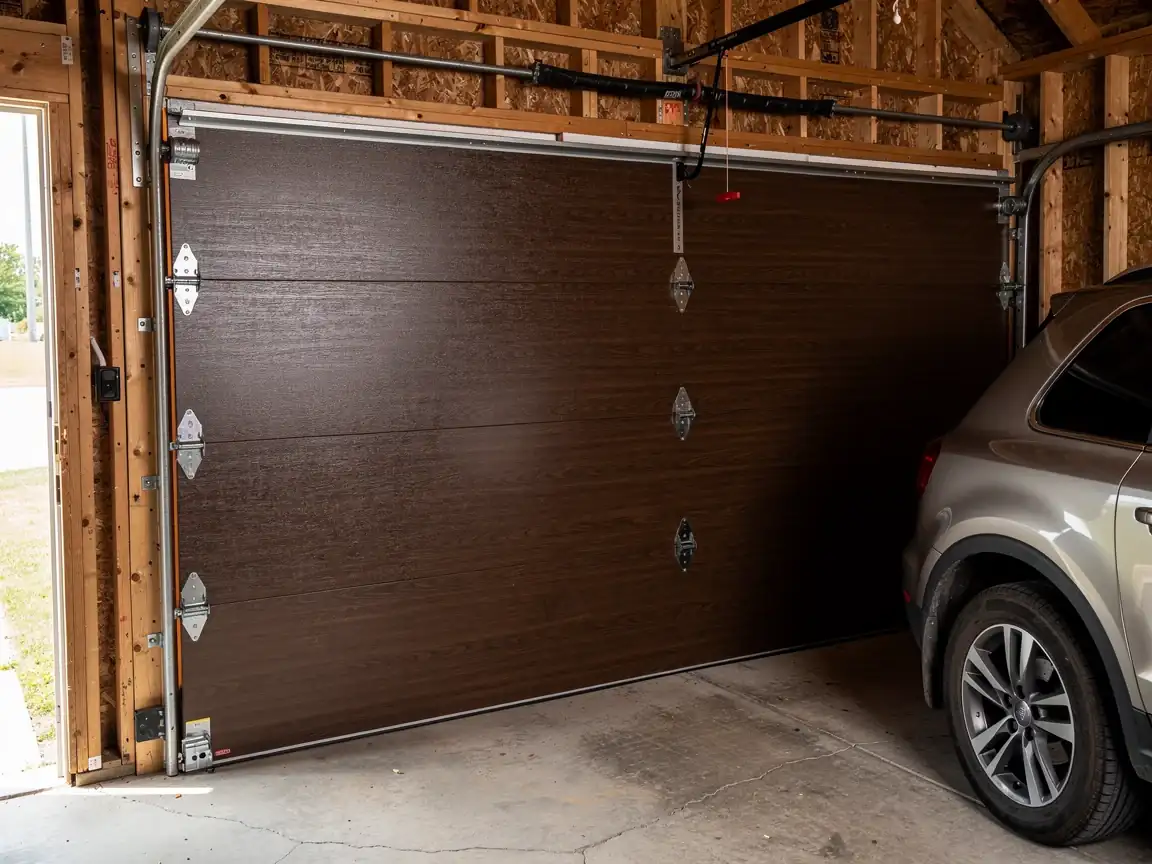
The failure we see repeated in Northampton is a homeowner replacing the opener but keeping a track or bracket set that was already failing underneath it - the new motor masks a bad track for a few months, then the real symptom comes back and looks like the new unit is defective. On a house with original 1938-era framing, the header mount the opener bolts to has sometimes shifted slightly over the decades, and a new opener bolted to a loose header will work the gear set harder than it should. We'll tell you straight if what you're describing sounds like a mounting problem rather than an opener problem, because replacing the motor a second time won't fix that. One honest limit: if the gear kit for your specific motor model is discontinued, which happens on some older units, full replacement is the only option - we won't pretend a workaround exists when it doesn't.