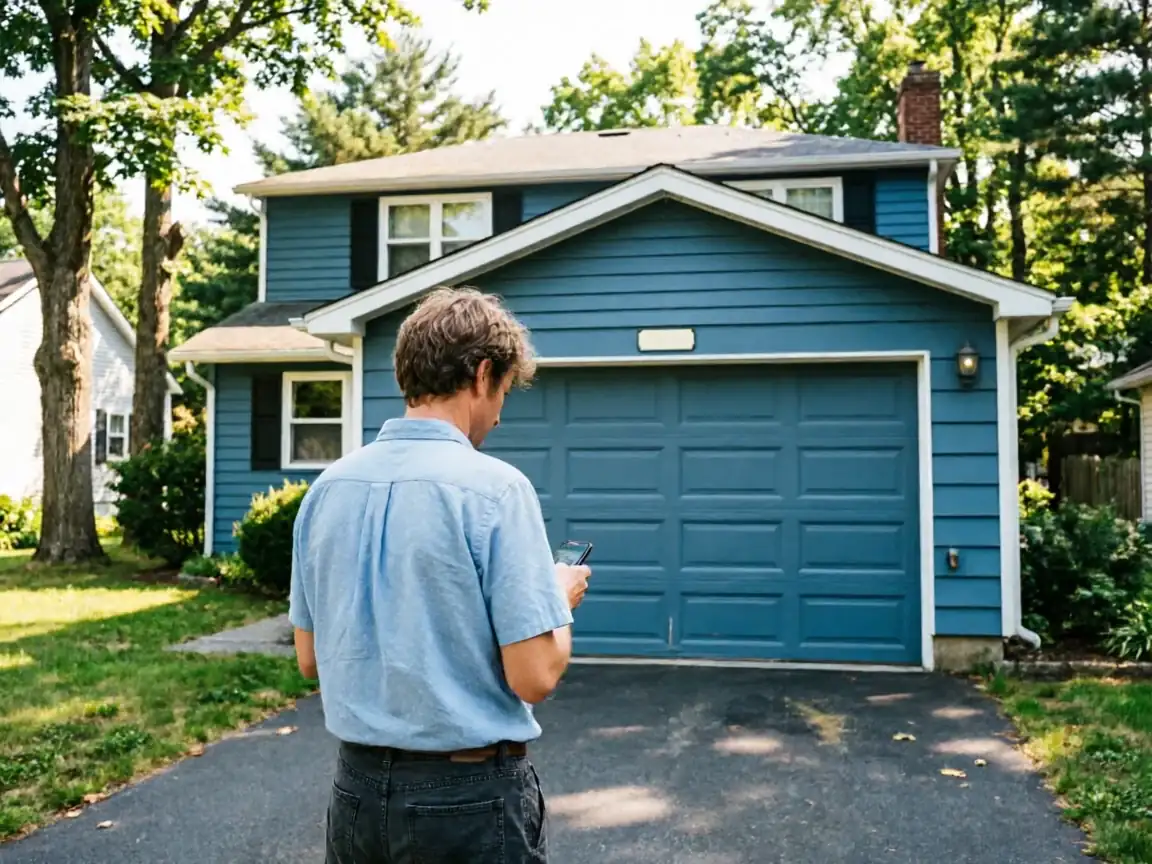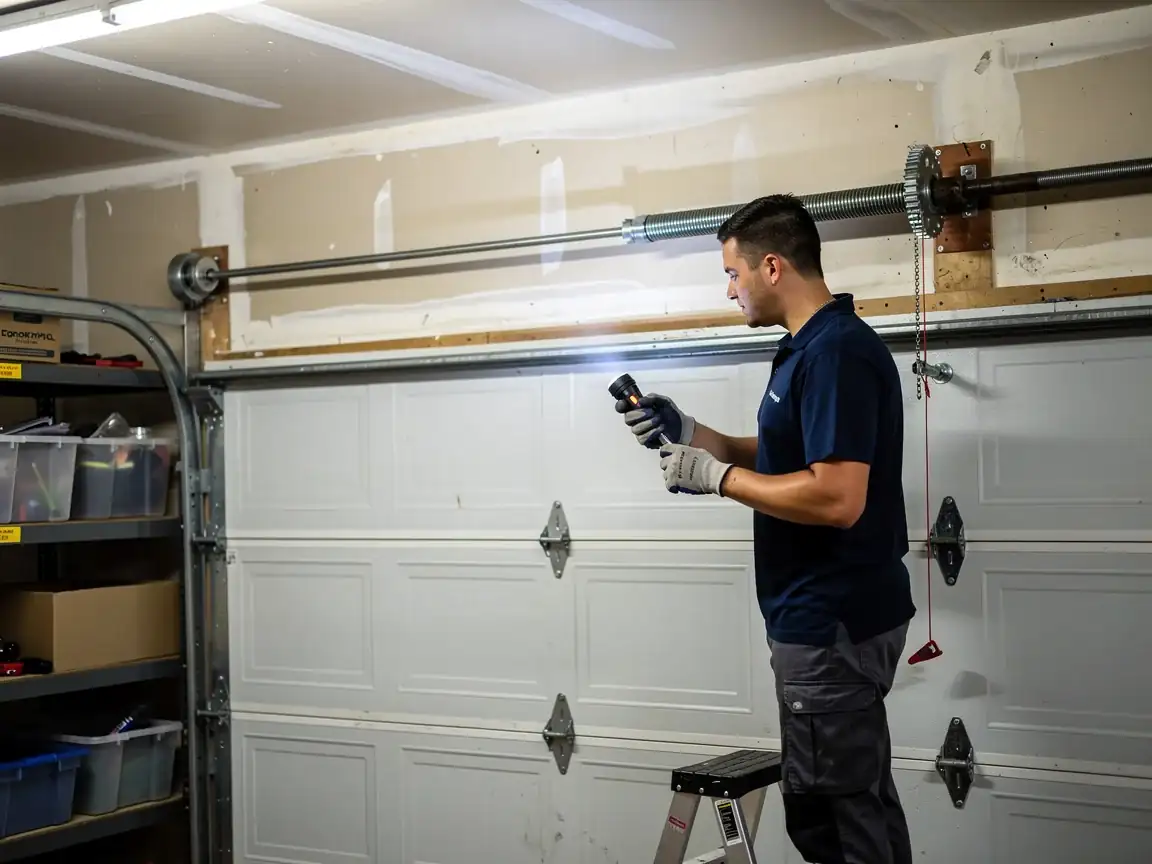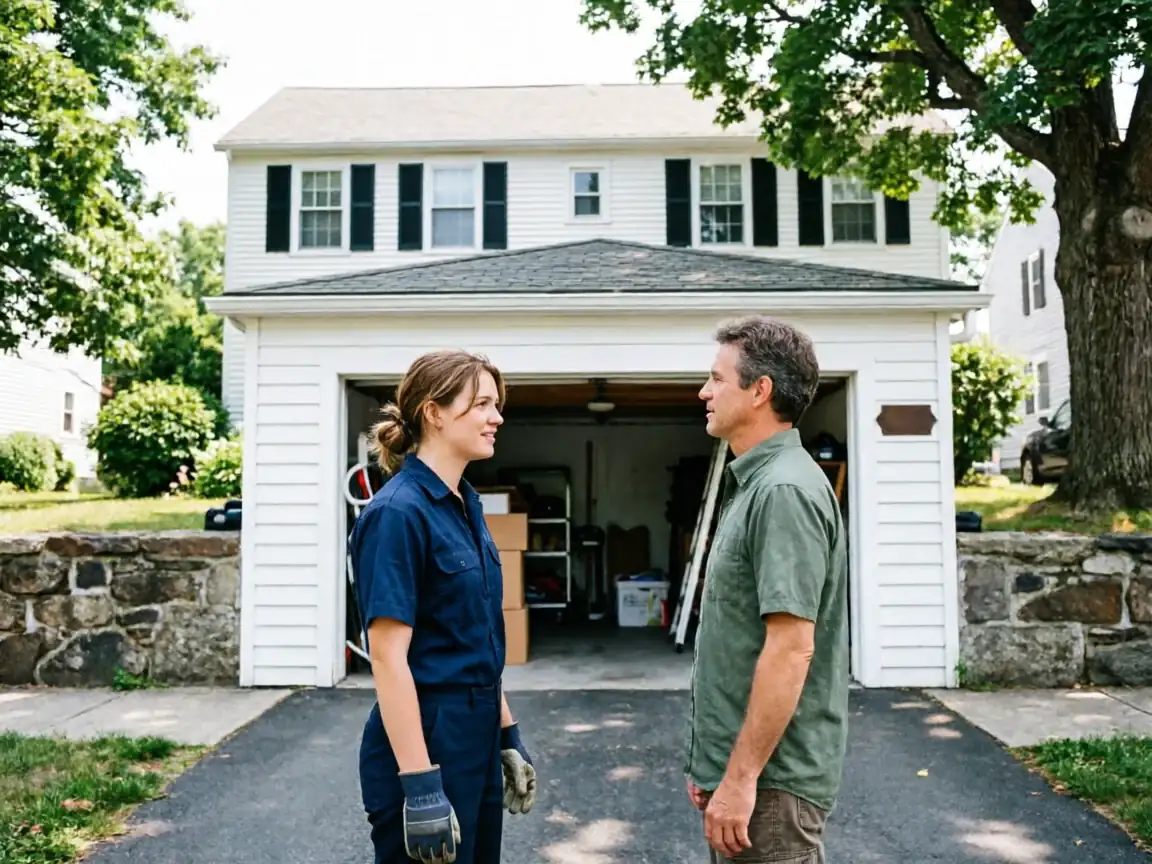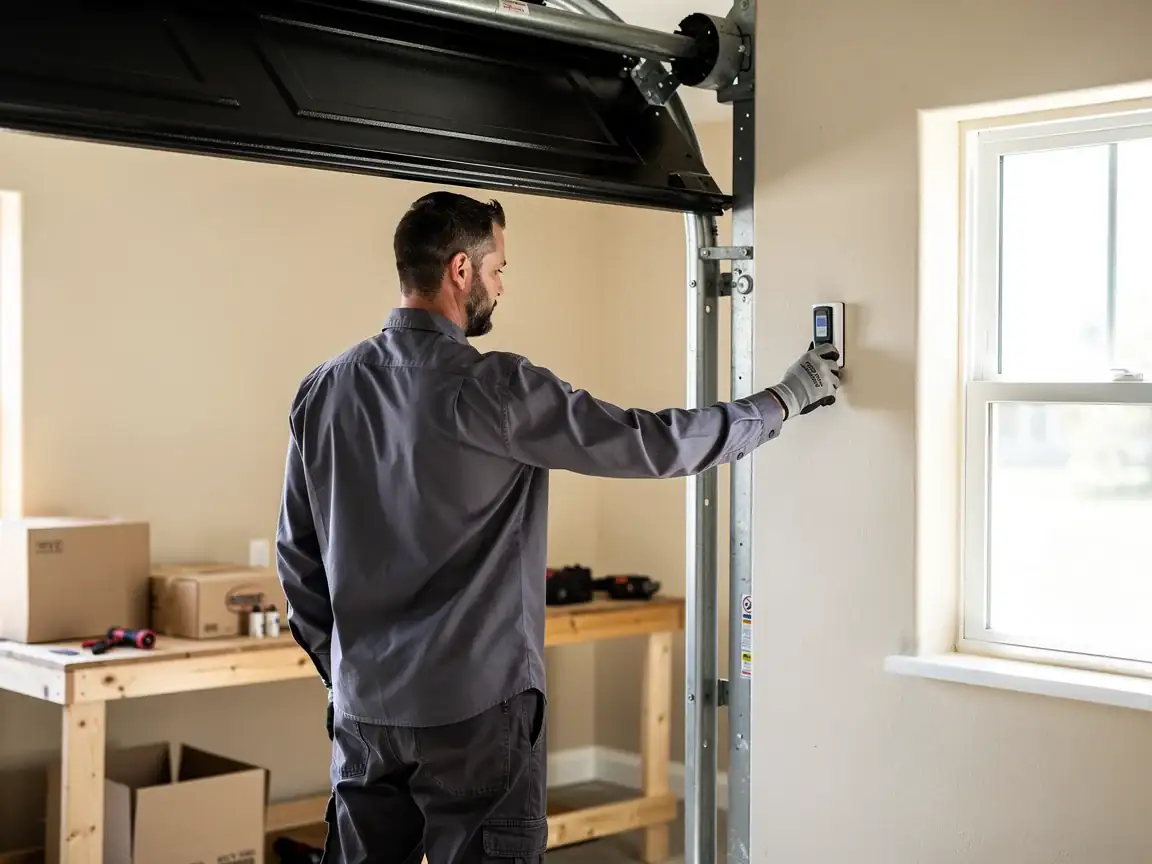
What to Look At First
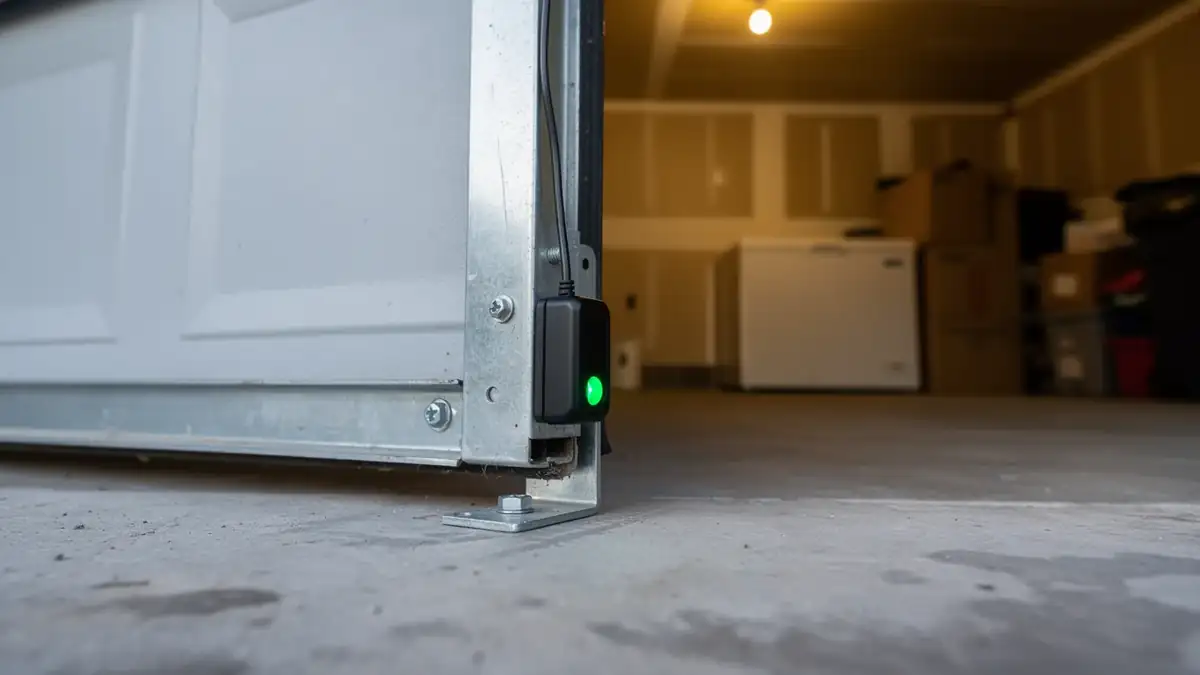
Start at the two small eyes mounted a few inches off the floor on either side of the track. On a lot of Allentown houses, those brackets were added after the door itself went in - the housing stock here runs 1938 to 2005 with a median build year of 1964, which means the original doors predate the federal rule requiring photo-eye sensors. That retrofit job used whatever bracket fit the existing track, often a thin aftermarket arm bolted to wood or old steel that's shifted over sixty-some years.
Check both lenses for a solid, steady light. One blinking and one solid means they're not talking to each other, usually because one bracket has tipped a few degrees. Look at the bracket itself before you touch the sensor: is the screw loose, is the wood behind it split, is the metal bent. On the 1960s and 70s stock that makes up most of the 52 named areas in this service area, that bracket metal has had decades to fatigue, and a bump from a bike or a snow shovel is enough to knock it out.
Don't aim a flashlight or a phone light at the lens to test it - that can give you a false reading. Cover one sensor fully with your hand and watch the opener's response instead.
When to Call Someone
Call when you've squared both brackets by eye, wiped the lenses, and the door still won't close, or closes and immediately reverses with nothing in the way. That's not a bracket problem anymore - it's likely a wiring issue inside a track frame old enough that the insulation has cracked, which is common in houses built before the 1980s. We see that a lot in the older end of the 1938-2005 build range.
Also call if the misalignment keeps coming back within days of you fixing it. A bracket that won't hold position usually means the mounting surface underneath is no longer solid - rotted wood trim or a track that's slightly bowed. Re-tightening the same screw into the same soft spot doesn't fix that.
One limitation worth saying up front: we don't rewire whole-house electrical panels or chase a short back past the opener's own harness. If the sensor fault traces into your home's wiring rather than the door hardware, that's an electrician's job, not ours.
What Is Going On
Garage door safety sensors work on a straight infrared beam between two points a few inches off the slab
That beam only has to move a fraction of an inch at either end to break. On houses from the 1964 median build year, the slab itself has had sixty years to settle unevenly, and the wall studs the brackets are screwed to have shifted slightly with the house. Neither movement is dramatic. Both are enough.
The other driver is temperature swing
Steel track and aluminum sensor arms expand and contract across a cold, severe climate band - the kind Allentown sits in - more than most owners expect from a part that looks fixed in place. Over a winter, that cycle loosens the screws holding the bracket just enough that by spring the beam is off by the width of a finger. You won't see it happen. You'll just notice the door reversing for no reason you can find.
How Local Conditions Play In
Allentown's winters are the real driver behind recurring sensor trouble, not the sensors themselves. In a cold, severe climate band, the ground under a slab-on-grade garage freezes and heaves slightly, then settles again as it thaws - a cycle that repeats every winter for as long as the house stands. On a house built anywhere near the 1964 median for this area, that's fifty-plus winters of small movement in the slab and the framing the sensor brackets are anchored to.
That's also why a one-time fix rarely holds for good here. Tightening a bracket in October doesn't account for what January's freeze does to the slab under it. If you own one of the older houses in this service area - built well before the 1964 median - expect to recheck alignment every fall before the cold sets in, not just when the door starts acting up. It's a five-minute check against a problem that otherwise shows up at the worst time, usually the first hard freeze.