What to Look At First
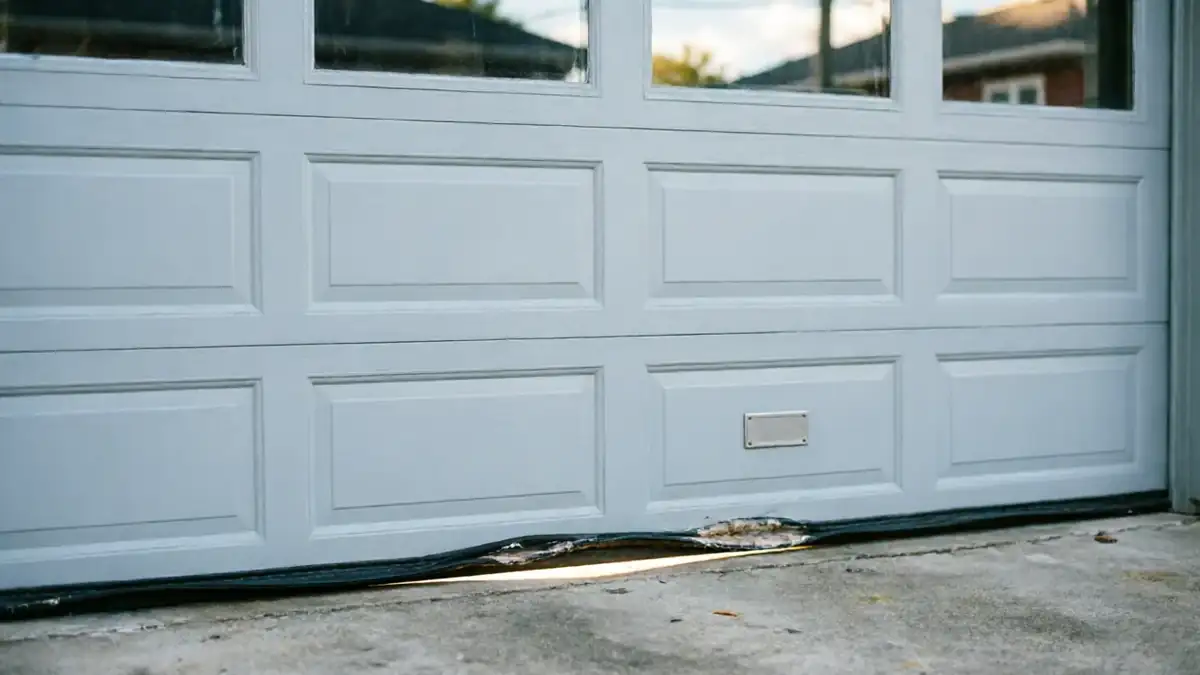
Start at the bottom seal, not the sides. Most houses on this side of the Lehigh Valley went up between 1938 and 2005, with the bulk of the stock from the 1960s and 70s, and those garages were built with a basic rubber astragal on the slab, nothing fancy. Thirty, forty, fifty years of driveway salt and sun has usually turned that strip hard and cracked, which is why you feel cold air pooling along the floor in January more than you feel it around the panel edges.
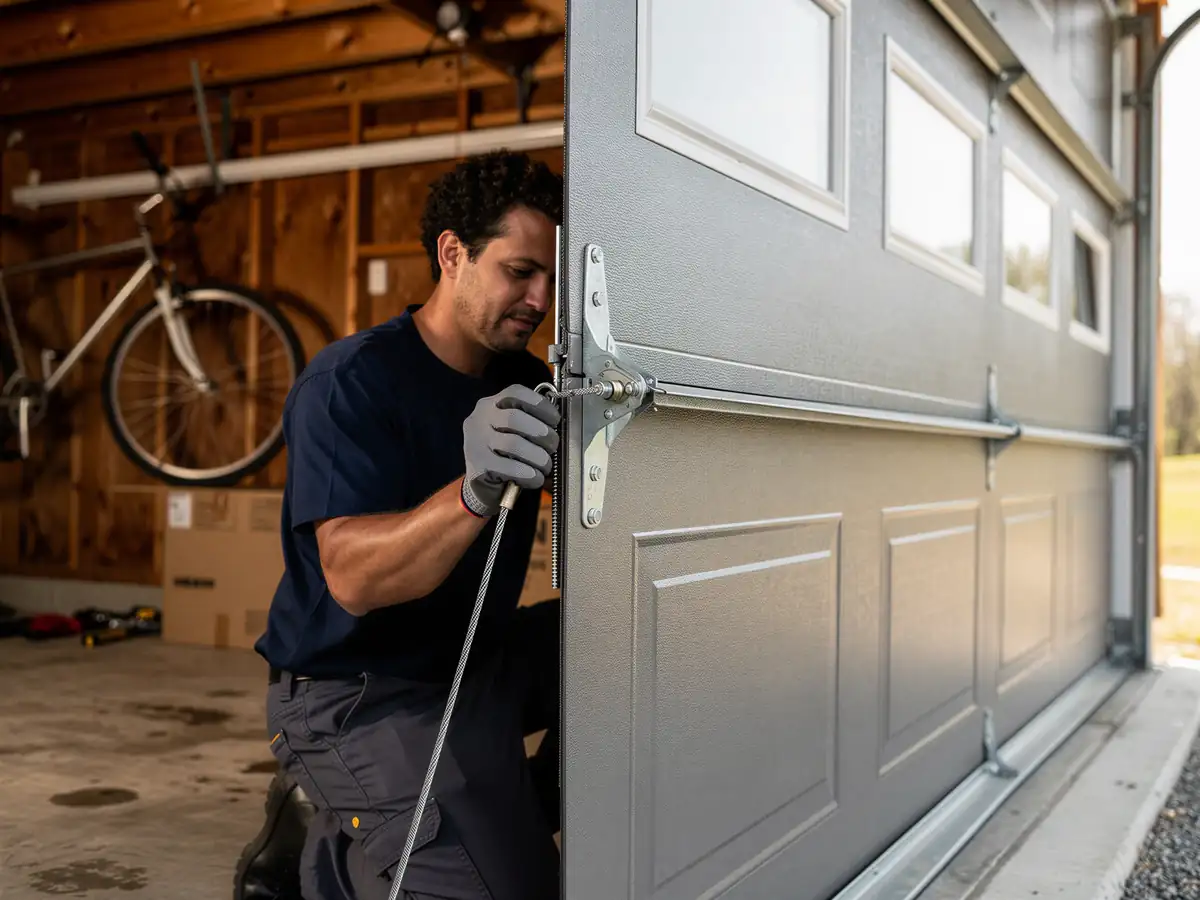
Next, run your hand along the side tracks where the door meets the jamb. In a lot of these older Allentown garages the framing has settled a little over the decades, so the seal that used to sit flush now has a gap at one corner that didn't exist when the door was installed. That's a shimming and alignment problem, not a seal problem, and no amount of new weatherstripping fixes it until the track is squared up.
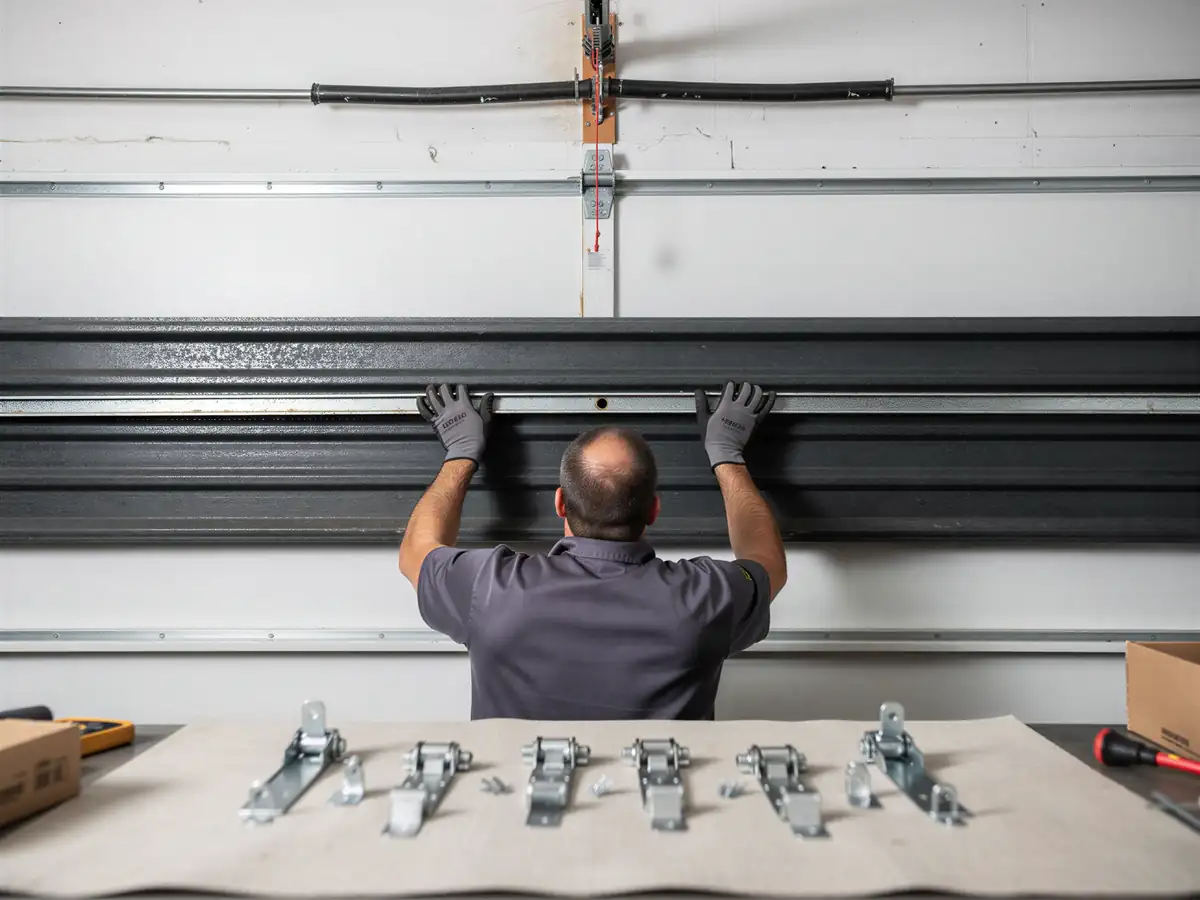
Last, check the top seal where the door meets the header. On the 1960s-era one-piece and early sectional doors still common in this stock, that top strip is often original or close to it, and it's usually the most brittle piece in the whole assembly.
When to Call Someone
If the bottom seal is cracked but the door still seats evenly on the slab, that's a part swap, not a service call you need to rush. You can often get by until spring.
Call sooner if you're feeling draughts through the side jambs in a house built before the 1970s. Framing in that era wasn't always squared to today's tolerance, and a gap that's letting in air is also letting in water, which in a COLD severe climate band means freeze-thaw cycling inside the track channel. That's what turns a minor draught into a bent track or a stuck roller by February.
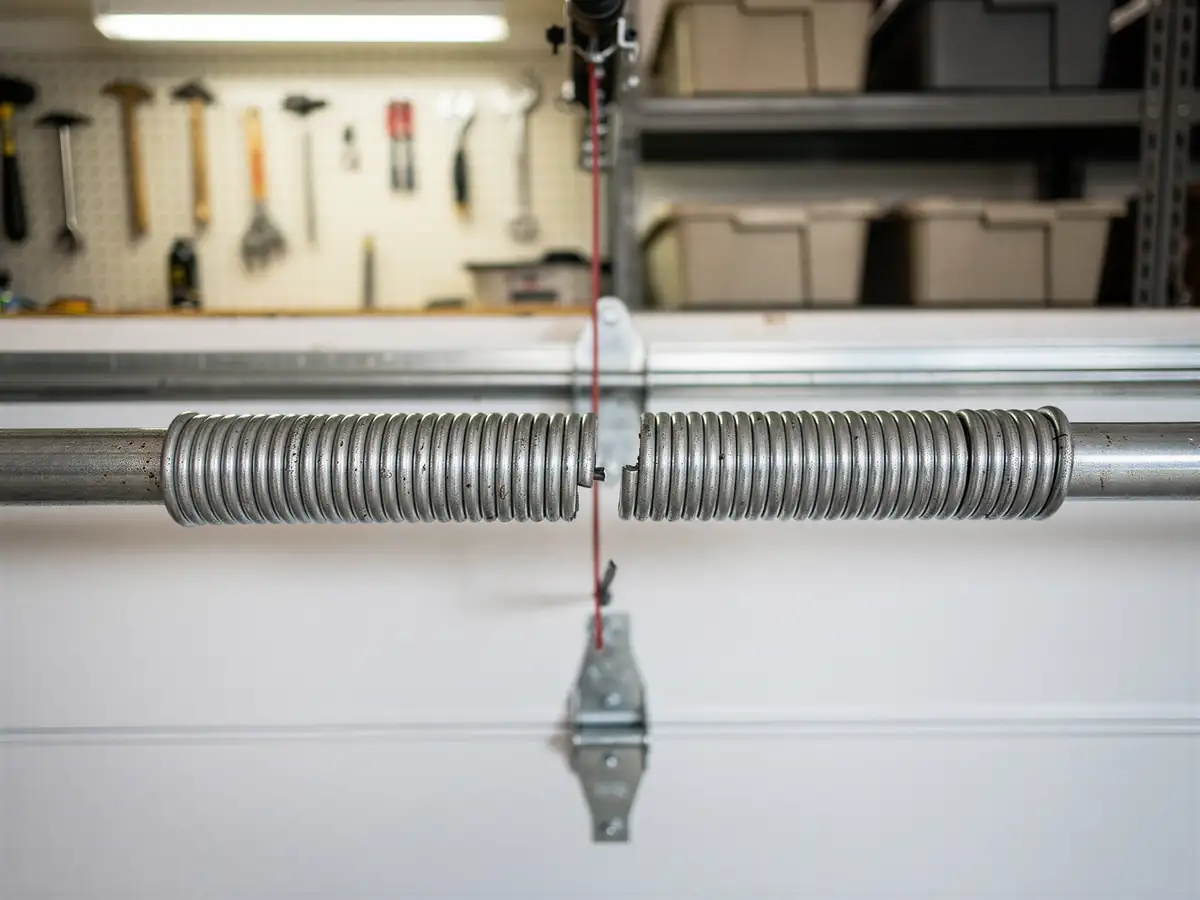
Also call if the door itself feels noticeably heavier or harder to lift in cold weather than it does in summer. That's not the seal, that's the spring losing tension as steel contracts, and it's worth a look before it fails outright on a ten-degree morning.
What Is Going On
Across the service area's roughly 54,983 owner-occupied houses
The garage door is usually original to a build era, not original to the current owner. A median build year around 1964 means a lot of these doors and their seals have outlasted at least one owner and one winter they'd rather forget.
- 54,983 owner-occupied
Rubber and vinyl seals break down from UV and from repeated compression-expansion in freeze-thaw swings
Which is exactly what a COLD severe climate band delivers for months at a stretch. The seal isn't failing because it's a bad product. It's failing because it's done its job for decades in a climate that asks more of it than a milder one would.
When a seal that age finally lets go, it's rarely just the rubber
The retaining channel underneath, especially on original one-piece doors from the 1960s and 70s stock common here, is often rusted or warped enough that a straight swap of weatherstripping won't seat right. That's the honest limitation: sometimes the fix a homeowner wants is a $20 strip, and the fix the door actually needs is a channel repair or a new bottom panel, and we'll tell you which one you're looking at before we quote anything.
How Local Conditions Play In
A COLD severe climate designation isn't just about how cold it gets, it's about how many times the temperature crosses freezing in a season. Each crossing flexes a worn seal, widens a hairline crack in an old track weld, and works grit into a bottom astragal that's already lost its elasticity. In a milder climate band that same seal might go another five winters. Here, it doesn't.
Because so much of the local housing dates to the 1960s and 70s across the named areas in this region, a lot of garages were built to the standards of that era: thinner slab-to-door clearance, minimal insulation in the door panel itself, and side seals that were adequate for the building codes of the time but not for how air-sealed homeowners expect a garage to be today. Retrofitting a tighter seal onto an old frame sometimes exposes how much the opening has shifted, which is why a seal replacement on a 1960s door can turn into a half-day job instead of a twenty-minute one. We'd rather tell you that upfront than have you find out mid-repair.