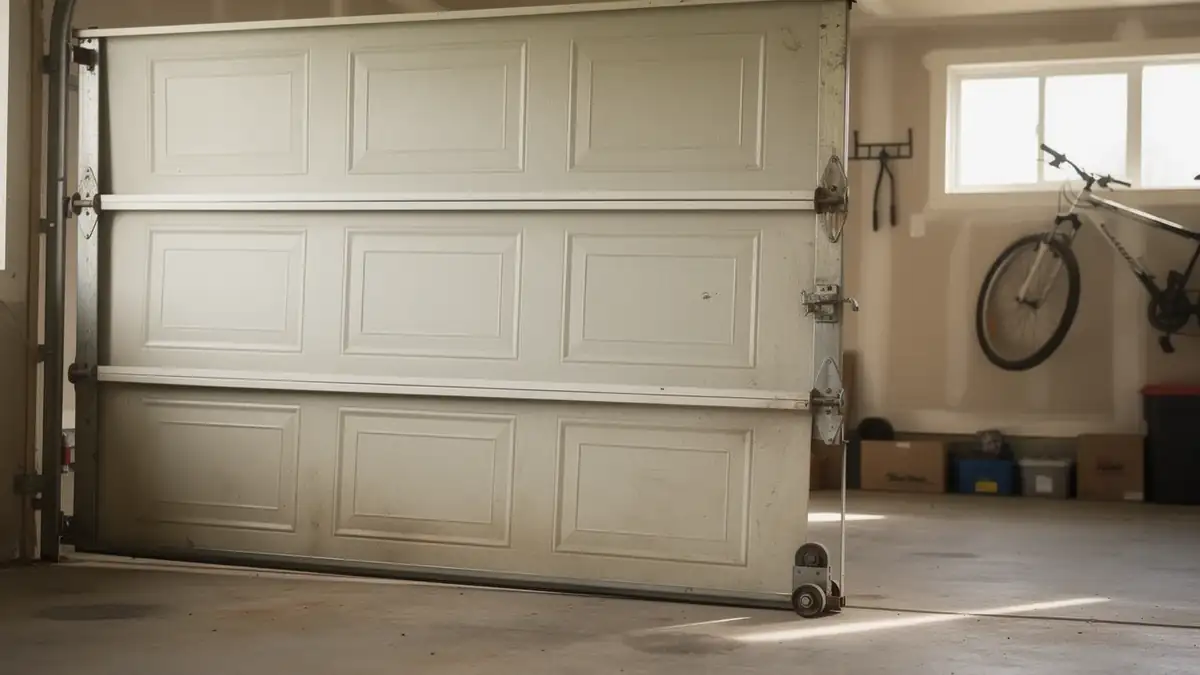
What to Look At First
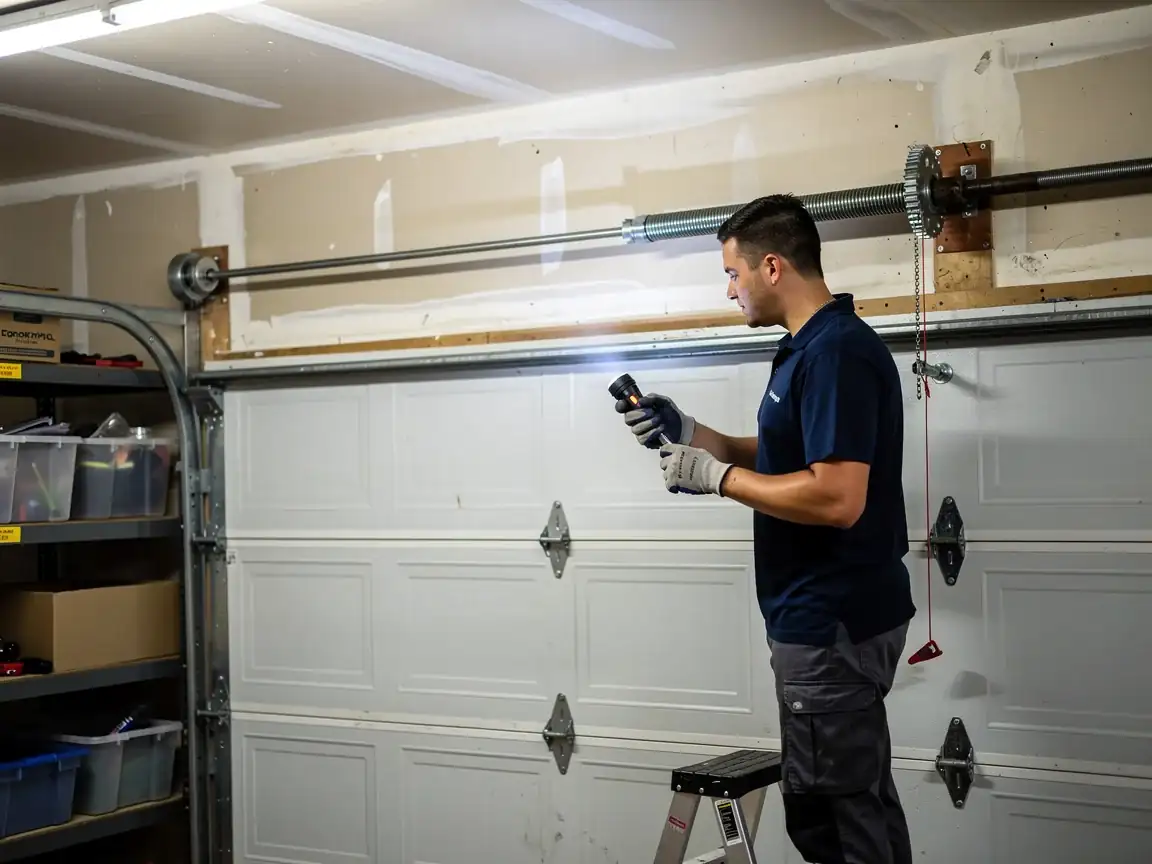
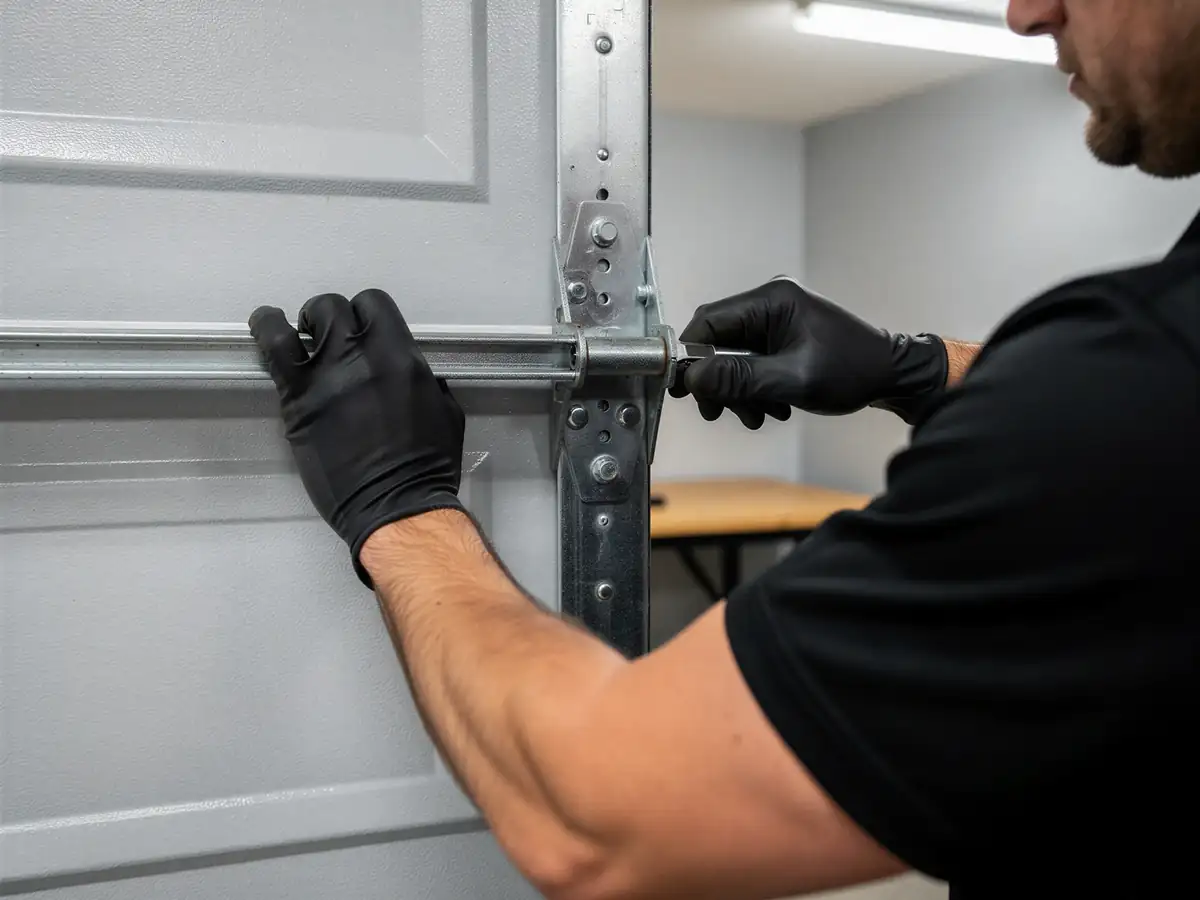
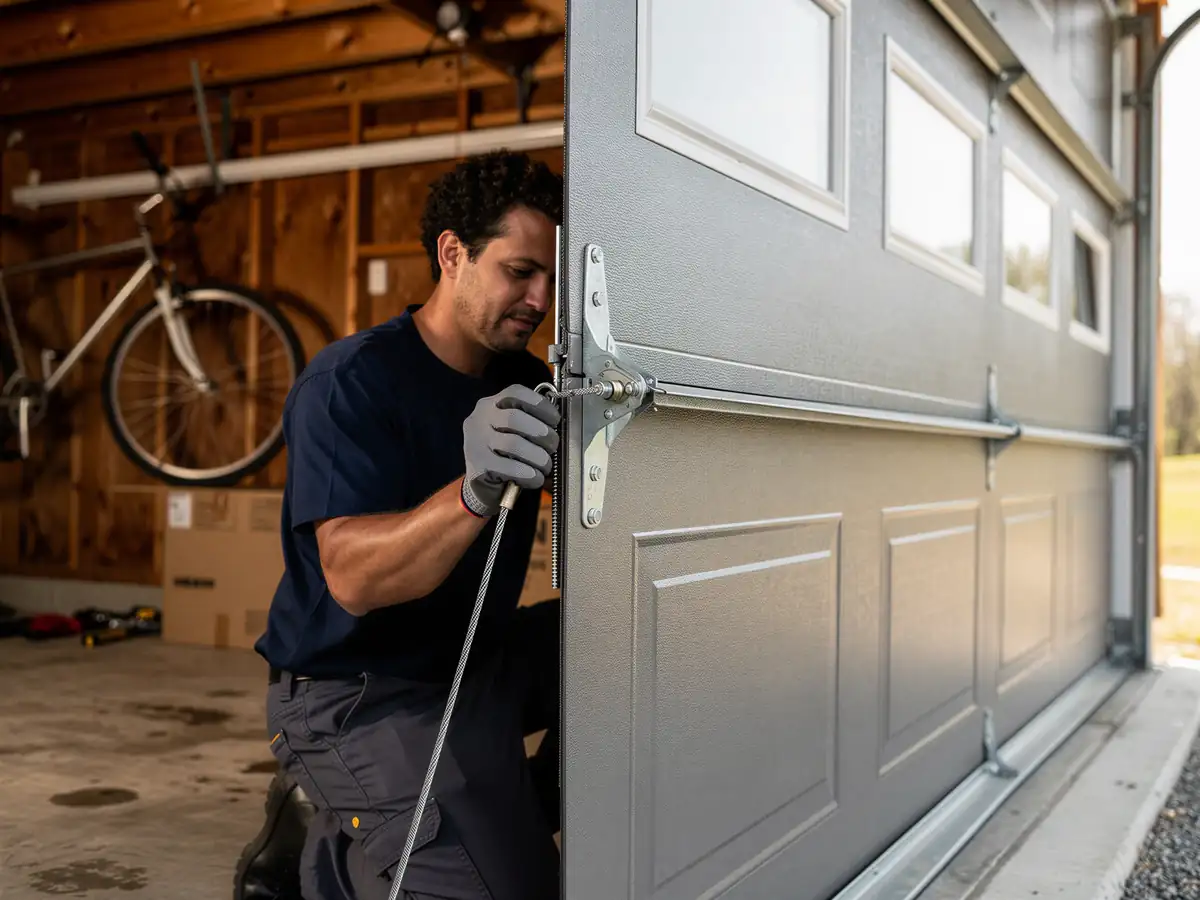
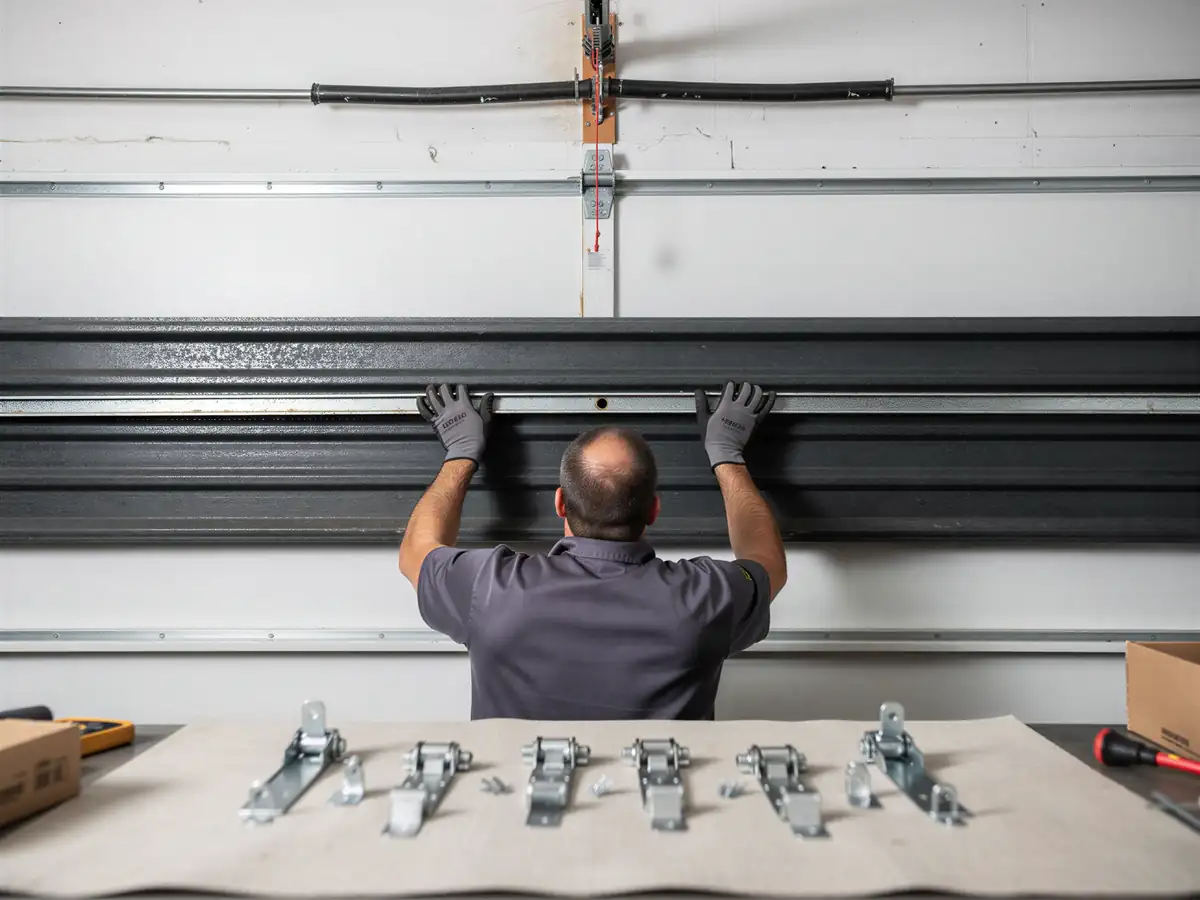
Start at the rollers, not the track itself. On a door that's gone off track, the rollers have usually popped out of the vertical rail near the bottom bracket, or the horizontal track has pulled away from its mounting on one side. Look for a gap between the roller and the rail, a bent spot in the track where it bows outward, or a bracket with loose or sheared bolts.
In a lot of Allentown's housing stock - built mostly in the 1960s and 70s, with plenty of homes going back to 1938 - the track is original or close to it. That means stamped steel rails that have flexed through sixty-plus winters, mounting brackets lag-bolted into framing that's shifted slightly over decades, and rollers that were never swapped for sealed-bearing versions. Check the bottom brackets first; they take the hardest hit when a door binds.
If the door is still sitting crooked in the opening, don't run the opener again. Running a motor against a bent track or a dislodged roller usually bends the track further or cracks a panel at the stress point.
When to Call Someone
Call before you touch the cables or the bottom bracket. The bottom bracket on a torsion-spring door is under tension even when the door looks parked and still - if a cable is also loose or frayed, trying to muscle the roller back into the rail can let the bracket snap free.
If you can see the track is bent more than about a half inch out of true, or if more than one roller has left the rail, that's a repair job, not a five-minute fix. The same goes for any door where the off-track event came with a loud bang or a dropped corner - that's often a spring or cable failure that knocked the door sideways, and the track damage is a symptom, not the cause.
One honest limit here: if the track is original 1960s-era stamped steel and it's bent in more than one place, we're not straightening it. Re-bent track fails again, usually within a season, so on older stock that kind of damage is a track replacement, not a repair.
What Is Going On
Most off-track doors come down to one of three things
A roller that's worn enough to walk out of the rail under normal travel, a bracket that's worked loose from the jamb, or an obstruction that catches the door mid-travel and forces it sideways.
In homes built across Allentown's main construction era
Median year 1964 - the common failure is worn rollers combined with brackets that were set with shorter lag screws than you'd use today. Fifty-plus years of the door's own weight working against those screws loosens them gradually. The door doesn't look wrong until the day a roller finally clears the rail entirely, usually on a cold morning when the steel track has contracted slightly and the clearance is at its tightest.
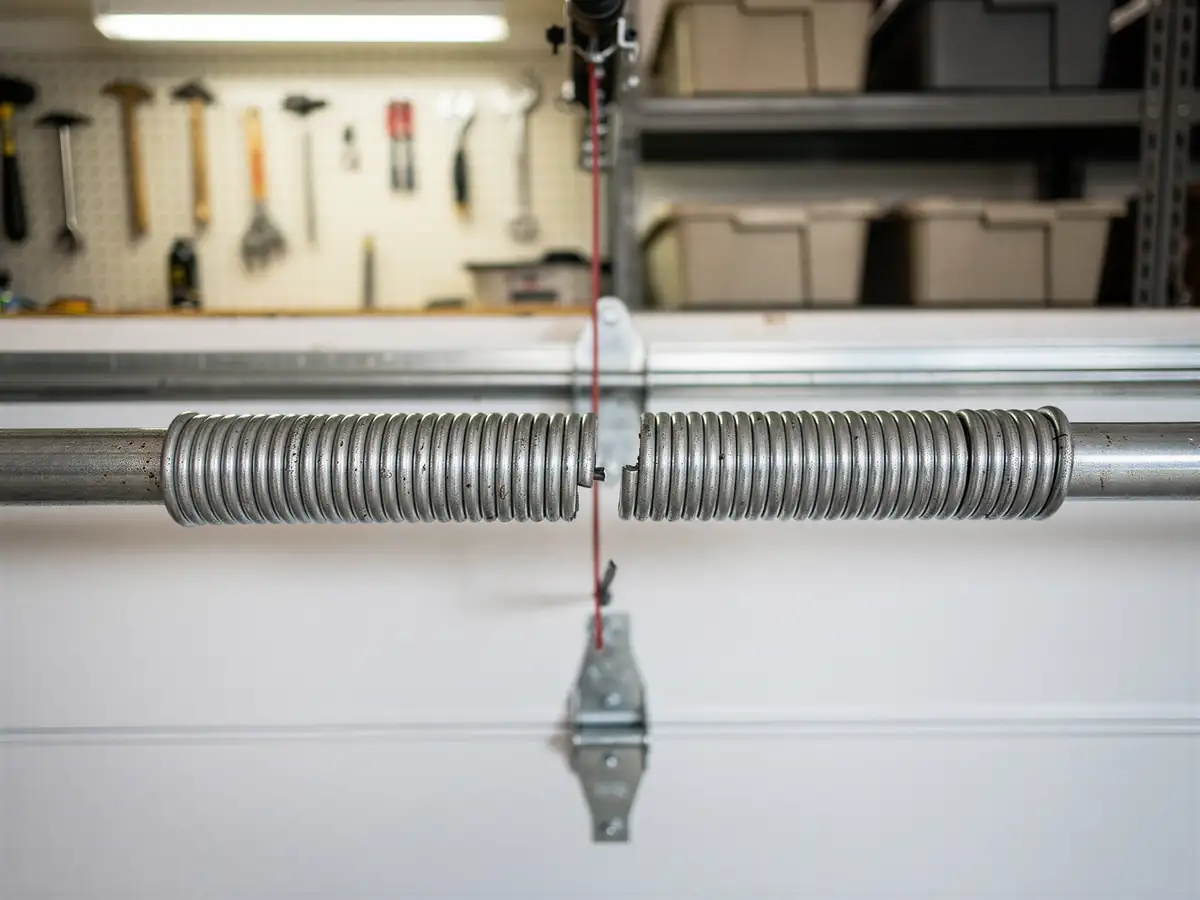
A second common cause on older doors is a broken or stretched extension spring on one side only
Which pulls the door unevenly as it travels and walks a roller out of the track. That's a spring problem wearing a track problem's clothes, and fixing the track without addressing the spring just buys you a repeat visit.
How Local Conditions Play In
Allentown sits in a cold-climate zone with real winter severity, and that matters more for track alignment than most owners expect. Steel track and steel rollers both contract in hard cold, which tightens the clearance between roller and rail right when lubricant has also thickened and grip has dropped. A door that's been riding slightly misaligned all summer - loose bracket, slightly worn roller - is far more likely to jump the rail on a 10-degree morning than in July.
That's compounded by the age of the housing stock here. A door built or installed any time close to the 1938-2005 range this area spans was engineered for the standards of its decade, not for today's heavier insulated panels or for sealed-bearing rollers. If a homeowner on an older rail swaps in a heavier replacement door without upgrading the track and rollers to match, winter is when that mismatch shows up as a door that rides rough and eventually comes off the rail.
We don't stock every bracket style from every decade of that range, so on older installs we sometimes need a day or two to source the right hardware rather than force a modern part onto an old rail.