The Symptom
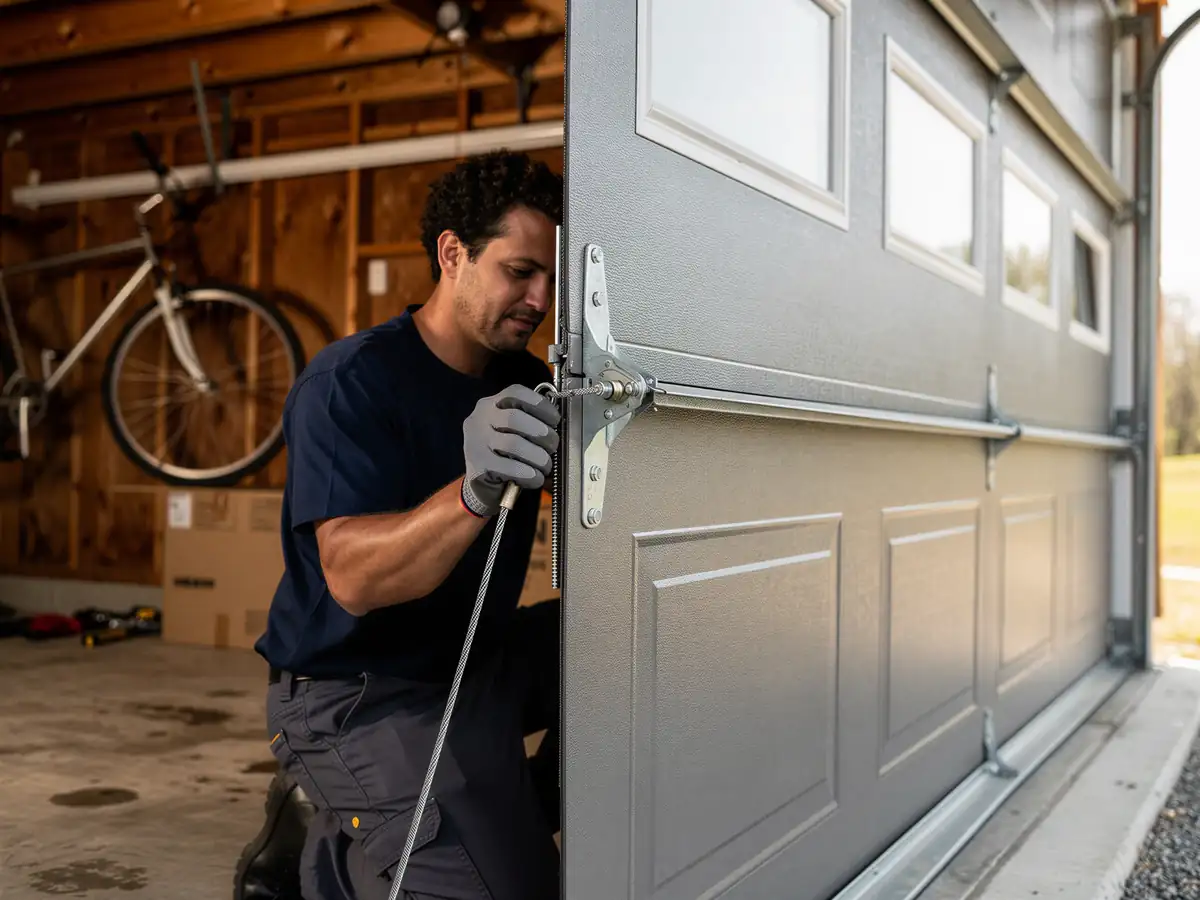
The usual call from Emmaus starts the same way: the door lifts a few inches crooked, or one side drops hard while the other side holds, and there's a cable hanging loose off the bottom bracket or wound wrong around the drum. Sometimes it's not dramatic at all - just a faint fraying sound every time the door cycles, like a wire brush dragging against metal, right before the cable lets go entirely.
Emmaus's housing stock sits at a median build year of 1957, older than much of the wider service area, and that matters for cables specifically. A lot of these houses still run the original extension-spring configuration - springs stretched above the horizontal tracks, with a cable looping down through a pulley to the bottom bracket. That pulley wears, the cable rides off-center over years of use, and the strands start shearing one at a time until the last few give out under load, usually on a cold morning when the steel is stiff and the door is heavier to move.
Where This Job Goes Sideways
A snapped cable on an extension-spring door isn't just a cable problem. If the pulley bracket has worn a groove or the stretched spring has gone slack from age, replacing the cable alone just sets up the next failure in a few months. On a 1957-era door, we're often looking at pulleys and brackets that have never been swapped, so the whole lift assembly gets checked, not just the broken wire.
Cold matters here too. This region sits in a severe cold climate band, and a frozen or stiff cable under tension is more likely to snap than fray gradually - it goes from fine to broken in one hard pull on a 10-degree morning instead of giving you a warning sound first. That's the call that comes in as 'it worked yesterday.'
The other way this goes sideways: a cable that's slipped off the drum but hasn't broken. People try to force the opener to close it anyway, and that's how a bent track or a cracked bottom panel section gets added to what should have been a simple cable reset.
Can You Do This Yourself
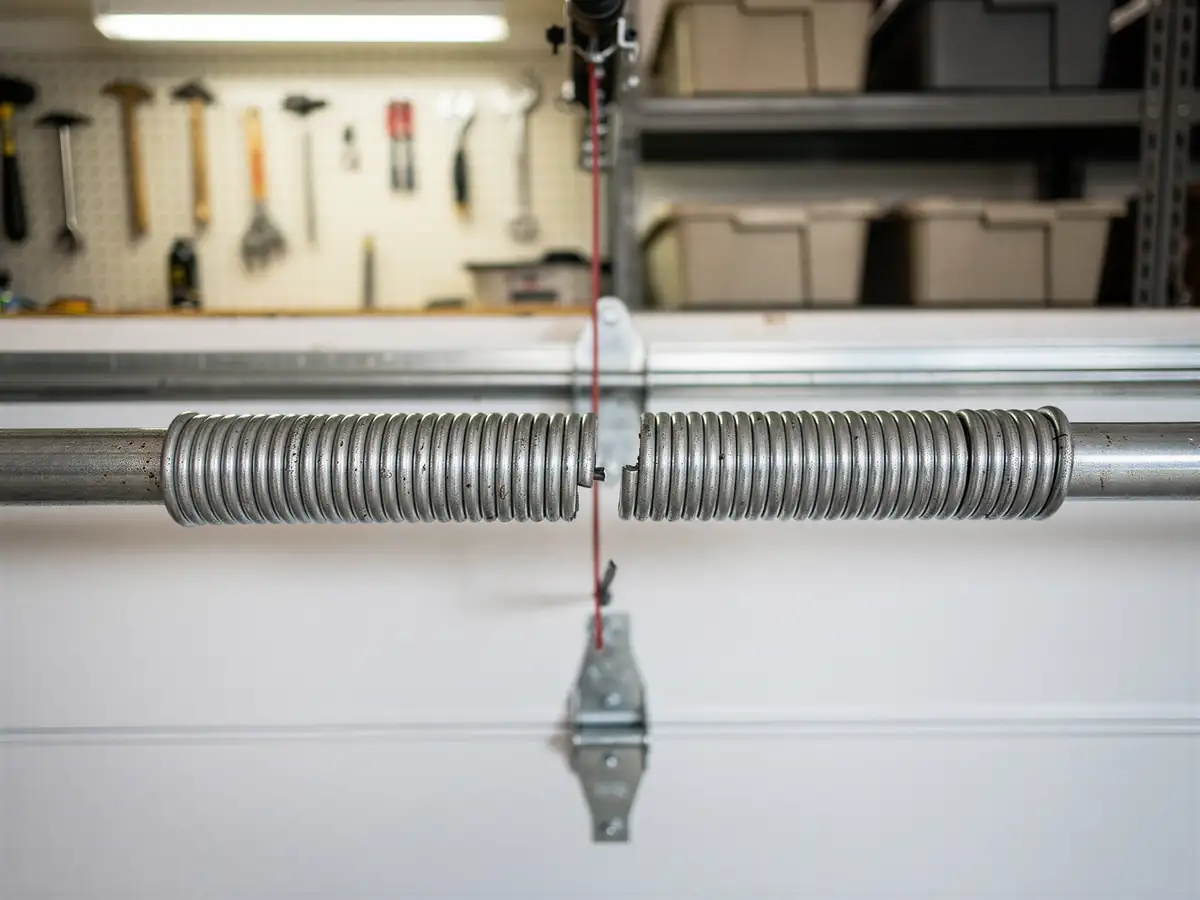
A loose or snapped cable on an extension-spring door is under real tension even when the door looks still
The spring above it is stretched and wants to move. This isn't a safe DIY repair, and honestly it's one of the few jobs in this trade where the risk doesn't match the savings. A cable or pulley costs very little; a trip to the ER for a hand caught in a releasing spring costs a lot more.
What you can safely check yourself
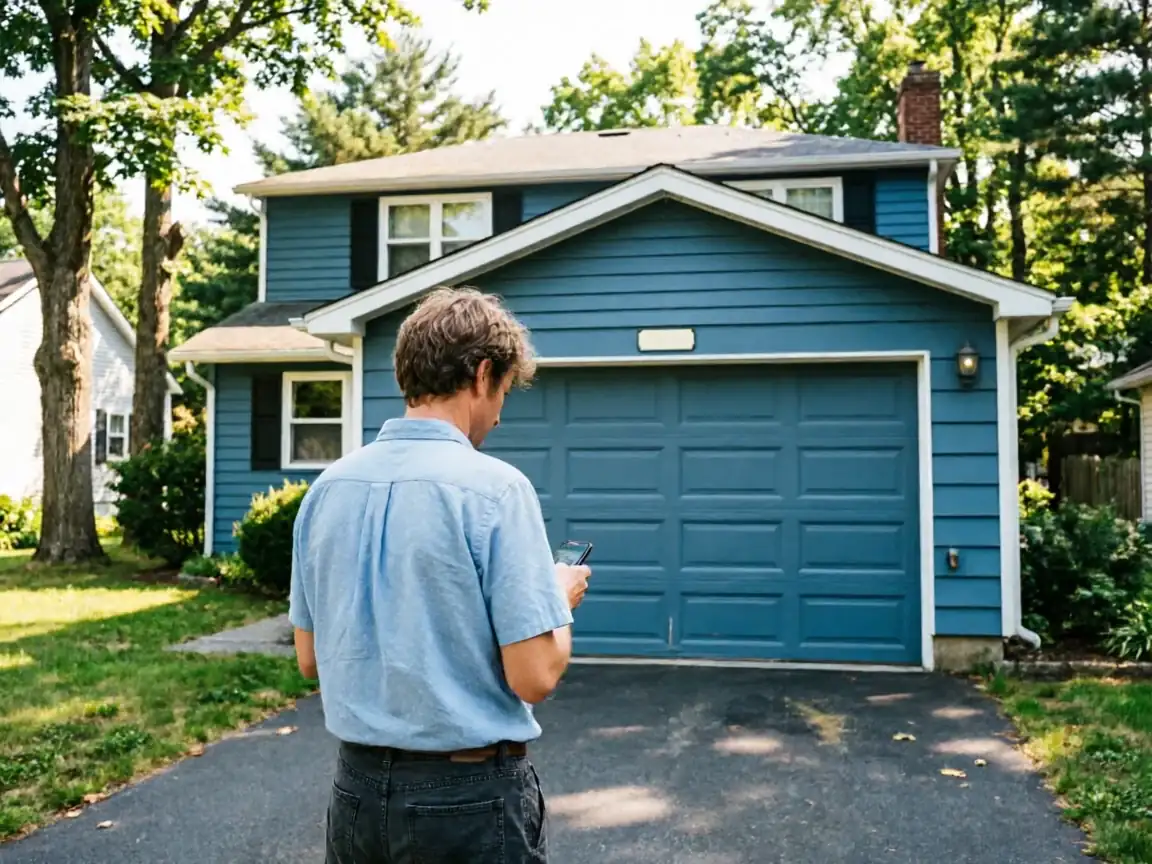
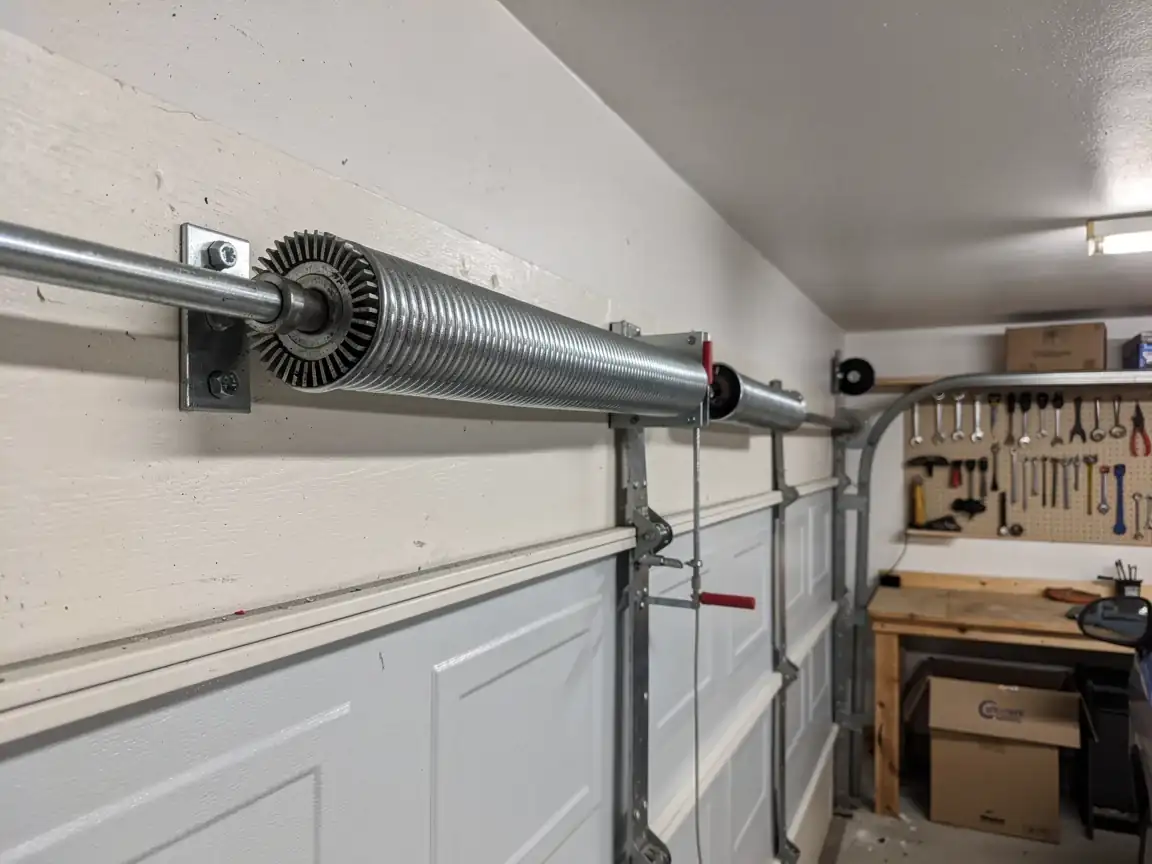
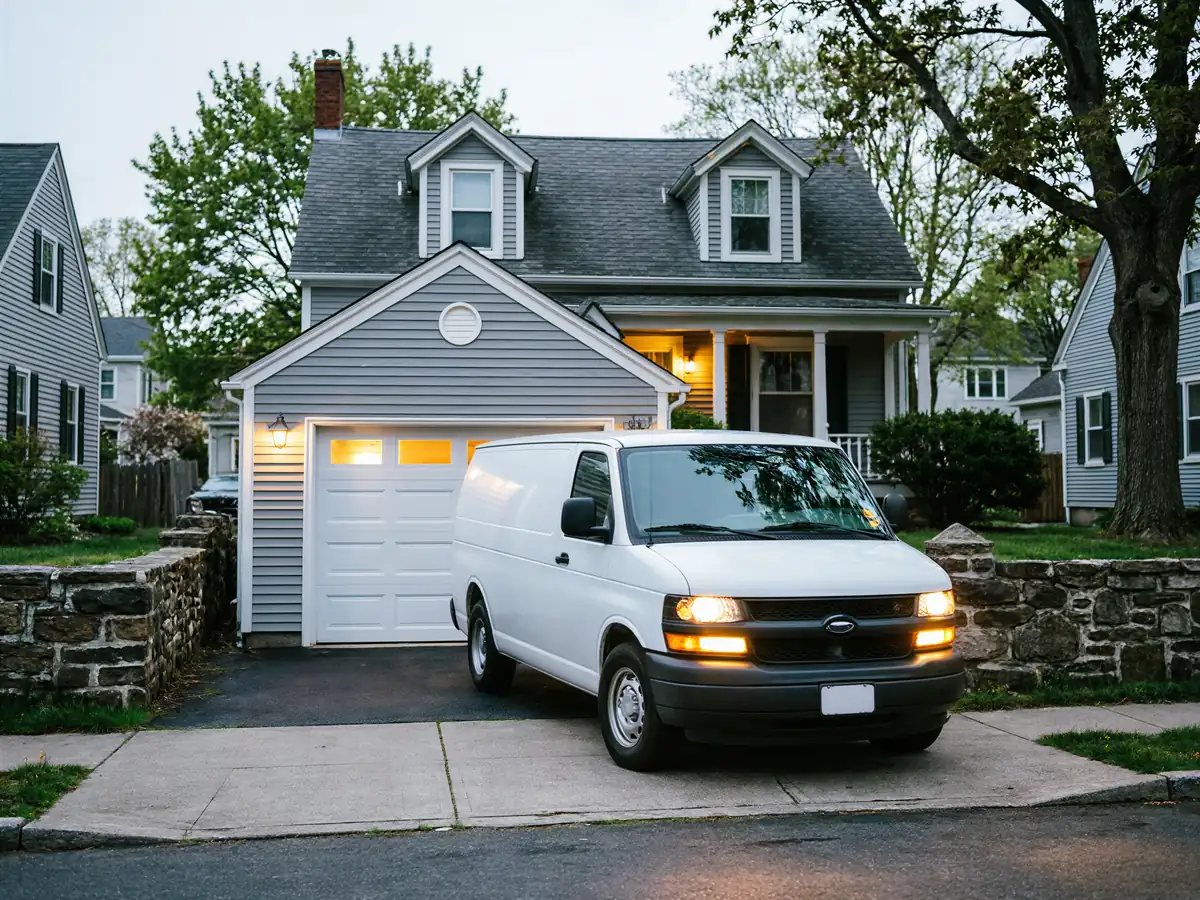
Whether the door is a torsion-spring setup (single spring across the top of the opening) or extension-spring (springs along the side tracks). That tells us what we're bringing on the truck before we make the drive out from Allentown, which saves a wasted trip for everyone.
What the Fix Involves
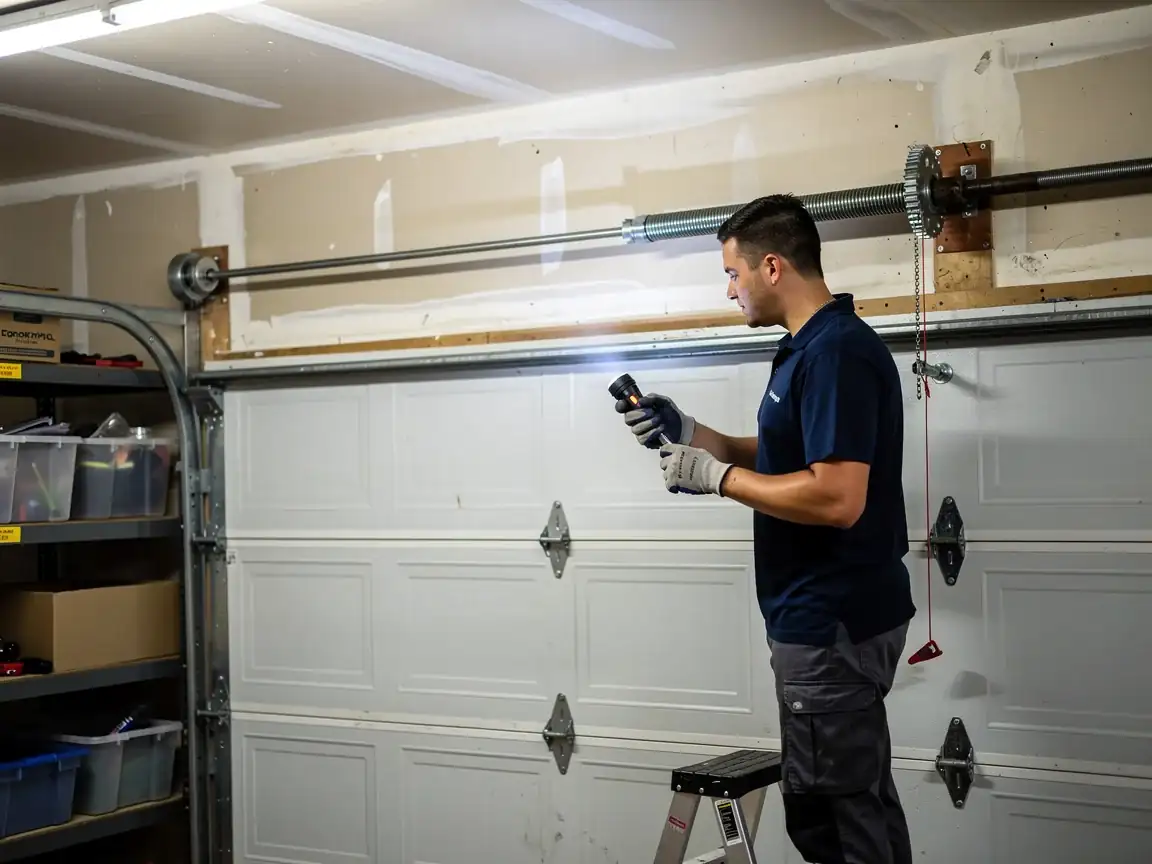
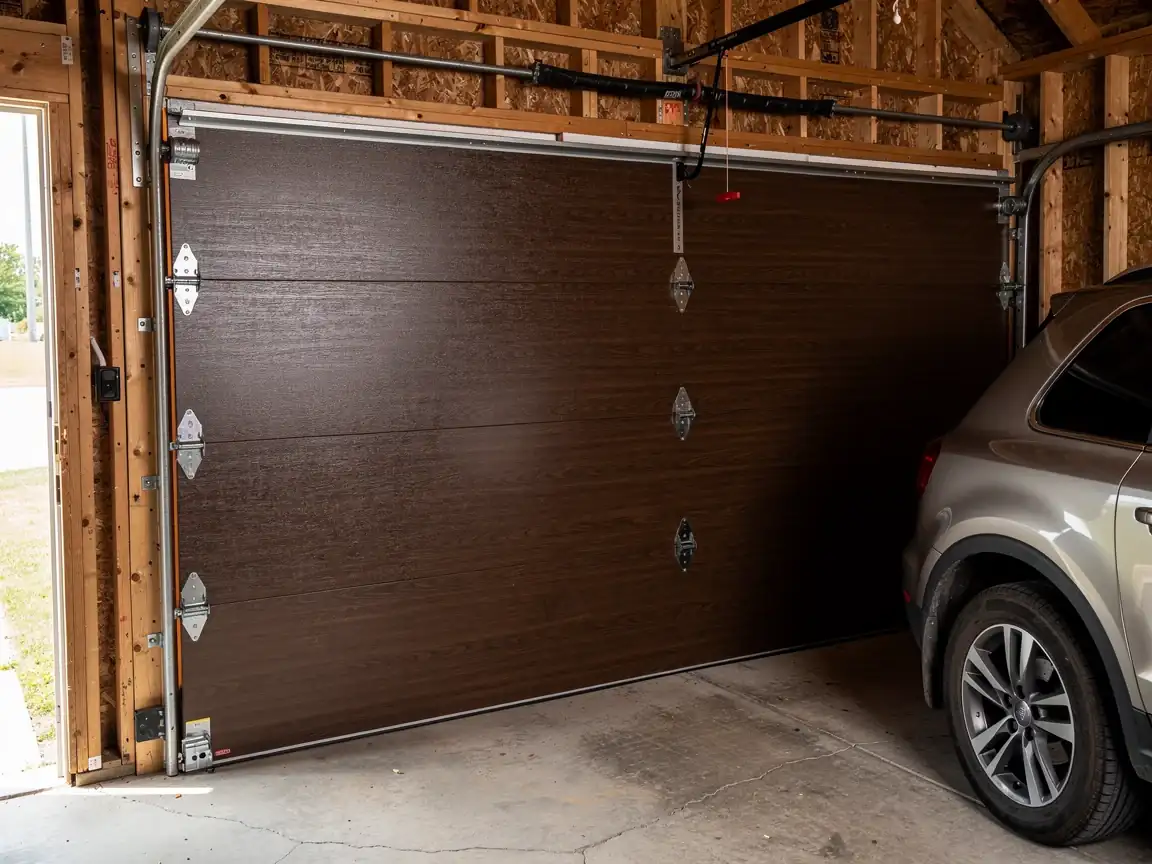
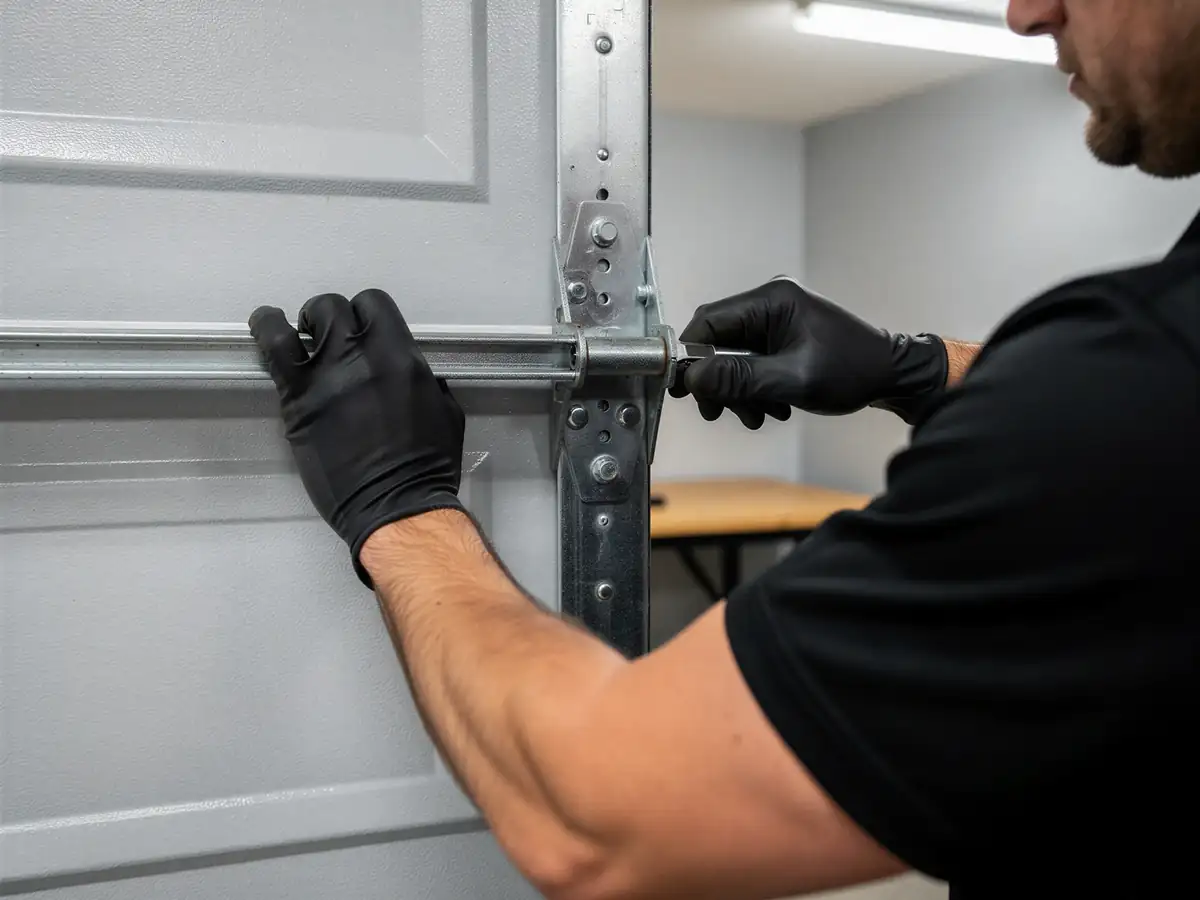
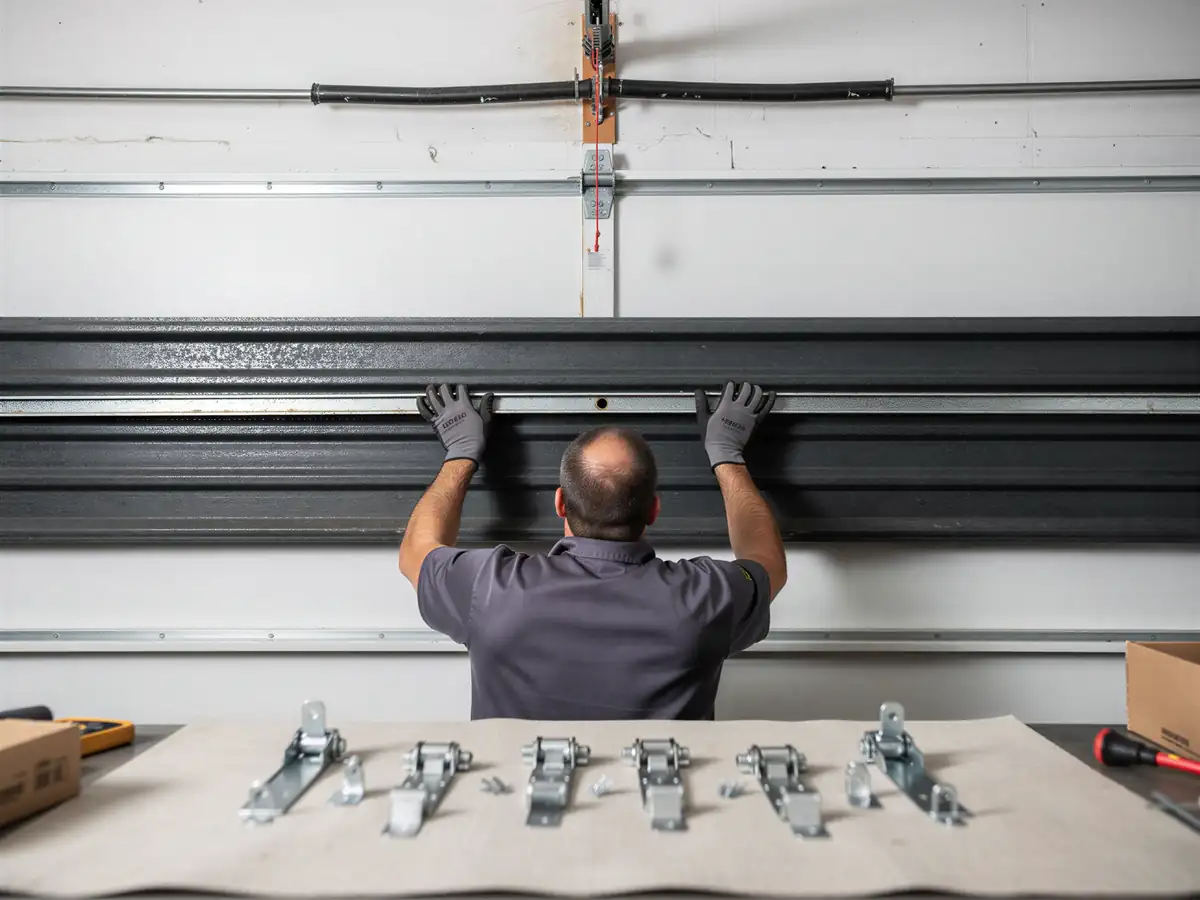
For a straightforward cable replacement, we pull the old cable, check the drum and pulley it rides on for wear grooves, and replace any of those parts that are chewed up rather than just swapping the cable and leaving a worn pulley to cut the new one in a year. On older Emmaus doors from the 1957-ish era, we're also checking whether the bottom brackets are the original stamped-steel type, since those sometimes need replacing alongside the cable rather than reused.
We don't stock every obsolete bracket size on the truck - some of the original hardware on 1950s-era doors isn't made anymore, and if yours is one of those, we'll tell you straight whether a hardware swap or a full door replacement makes more financial sense, rather than forcing a patch that won't hold.